
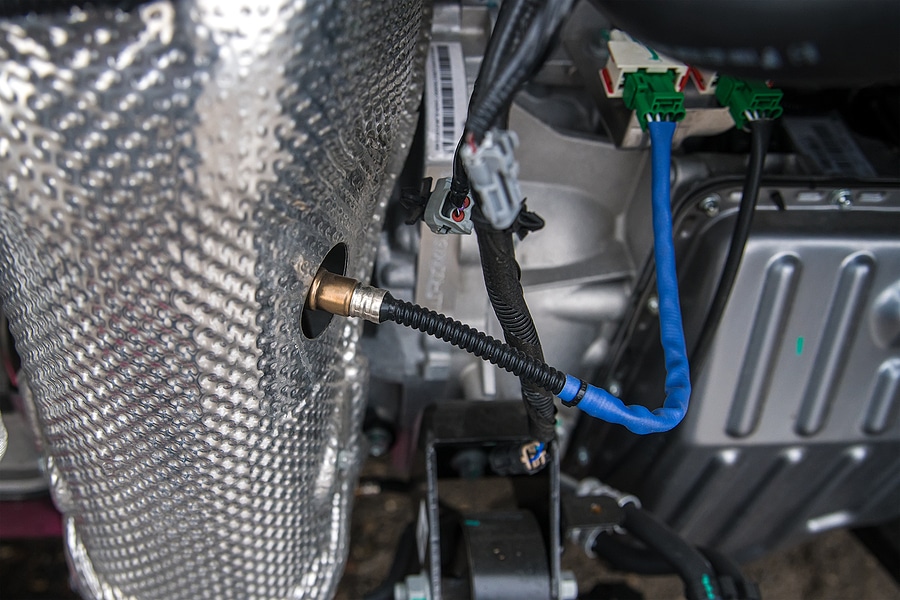
What is an Oxygen Sensor?
Many people are mystified about the workings of that device in the exhaust system called the oxygen sensor (02S). How does something in the exhaust stream generate voltage and help the engine control module (ECM) to adjust the air/fuel mixture? What makes an 02S go bad?
The heart of a typical 02S is a thimble-shaped element made of a special material called zirconium dioxide (ZrO2). The inner and outer surfaces of this element each have an electrode made of a layer of thin porous platinum. The 02S is designed so that the inner surface of this element is exposed to ambient air (the atmosphere), while the outer surface, which also has a porous ceramic coating, is exposed to the exhaust gases.
While some oxygen is still present in burned exhaust gases, there’s obviously more oxygen present in the atmosphere. Because the oxygen proportions differ between the inner and outer surfaces of the element, and thanks to the special properties of the ZrO2, a voltage is generated between the two electrodes.
Keeping in mind that the amount of oxygen in the atmosphere is relatively constant, the voltage output will vary as the amount of oxygen in the exhaust gases varies. Less voltage is generated when the air/fuel mixture is lean because of the higher oxygen content in the exhaust. More voltage is generated when the air/fuel mixture is rich because of the lower oxygen content in the exhaust. By monitoring this voltage, the ECM knows how rich or lean the air/fuel mixture is, and it adjusts the mixture accordingly.
Why Do Oxygen Sensors Fail?
So what makes an 02S stop working properly? Carbon from exhaust? Sounds logical, but no, the number one enemy of an 02S is silicone. When the exhaust side of the element is exposed to silicone, the pores of the protective ceramic coating
become clogged. Once this occurs, the exhaust side receives less oxygen. As a result, the 02S generates more voltage than it normally would for a given air/fuel mixture. his may cause the ECM to lean the mixture enough to cause driveability problems or trigger the malfunction indicator lamp (MIL).
If the ambient air side of the element is contaminated with silicone, the porous electrode becomes clogged, reducing the oxygen on that side. Then the 02S will generate less voltage, so the ECM tries to compensate by richening the mixture. This too may deteriorate driveability or trigger the MIL.
Sometimes the source of the silicone may be the fuel, but the more likely sources are silicone sprays, greases, and adhesives. When you use these products, don’t let them get into the engine’s air intake tract, the exhaust system (upstream of the 02S), or the vents on the 02S.
Symptoms of a Bad Oxygen Sensor
A failing oxygen sensor can quietly affect your vehicle long before a breakdown happens. Because the oxygen sensor controls the air-fuel mixture, even small errors can lead to noticeable performance problems.
Common bad oxygen sensor symptoms include:
- Check engine light turning on
- Decreased fuel efficiency
- Rough idling or engine hesitation
- Failed emissions test
- Strong fuel smell from the exhaust
- Sluggish acceleration
- Engine misfires
If ignored, a faulty oxygen sensor can damage the catalytic converter, one of the most expensive exhaust repairs. Early oxygen sensor repair helps prevent costly downstream failures and restores fuel economy.
Drivers in Baltimore County often mistake these symptoms for general engine problems, but a professional diagnostic scan at a trusted Towson auto repair shop can confirm the issue quickly.
Oxygen Sensor FAQ
How long does an oxygen sensor last?
Most oxygen sensors last between 60,000 and 100,000 miles. However, contamination from oil, coolant leaks, or silicone products can shorten lifespan significantly.
Can I drive with a bad oxygen sensor?
Yes, but it’s risky. Driving with a failing sensor reduces fuel efficiency and can damage the catalytic converter. What starts as a small repair can turn into a major exhaust system expense.
Will a bad oxygen sensor cause a check engine light?
Yes. Oxygen sensor failure is one of the most common reasons for a check engine light. A diagnostic scan is needed to confirm the exact sensor involved.
Does a faulty oxygen sensor affect gas mileage?
Absolutely. A malfunctioning sensor can reduce fuel economy by up to 40% because the engine runs inefficiently.
Can I replace an oxygen sensor myself?
Some experienced DIY drivers can, but oxygen sensors often seize in place due to heat and corrosion. Professional oxygen sensor replacement ensures proper torque and prevents exhaust damage.
How much does oxygen sensor repair cost in Towson?
Costs vary by vehicle and sensor location, but oxygen sensor repair is typically far less expensive than catalytic converter replacement. Early service saves money long term.
How many oxygen sensors does my car have?
Most modern vehicles have 2–4 oxygen sensors depending on engine design and exhaust layout.
Can a bad oxygen sensor cause rough driving?
Yes. Incorrect air-fuel mixtures can lead to hesitation, misfires, and unstable idle.
Contact Us for Towson Auto Repair & Maintenance
For Towson residents in need of top-notch mechanical services, Hollenshade’s is your trusted partner. Our experienced team is here to provide a wide range of automotive solutions, including oxygen sensor repair and replacement. Ensuring that your vehicle’s oxygen sensor functions optimally is essential for maintaining fuel efficiency and reducing harmful emissions. If you require assistance with your oxygen sensor in Baltimore and/or the surrounding region, please don’t hesitate to contact us. Our dedicated professionals are ready to address your needs and keep your vehicle running smoothly. At Hollenshade’s, your satisfaction and your vehicle’s performance are our top priorities.