
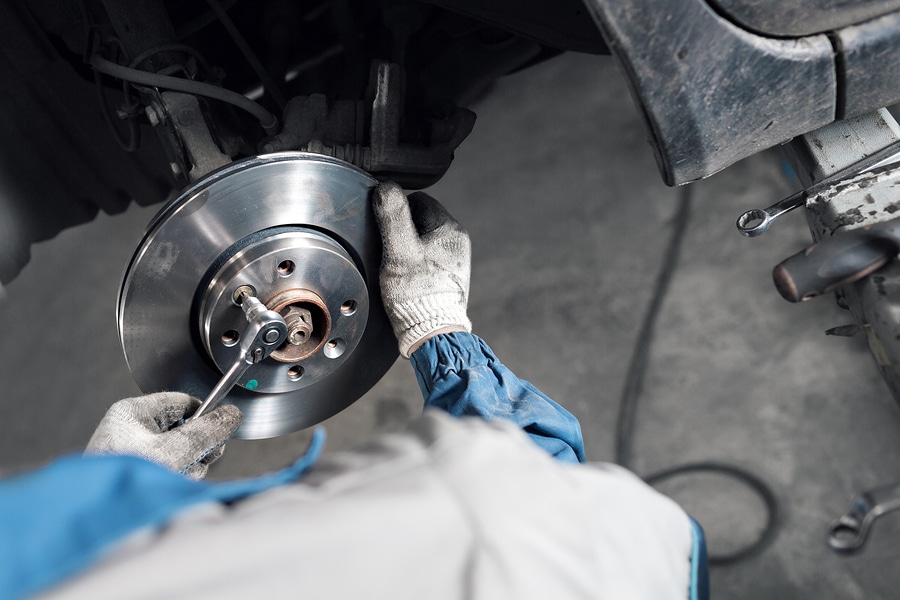
It’s vital that you have regular brake maintenance performed to remain safe on the road. Once you understand the process and what needs to be accomplished, you’ll know when to take your car in for brake service.
Each component of your brake system needs attention. There are five to think about: the master cylinder, lines, calipers, rotors, and pads. To fully maintain your brake system, you’ll need to understand what each of these does.
Master Cylinder & Brake Lines
A vehicle’s brakes run hydraulically. Fluid transfers the power from your foot pedal and sends it to the brakes themselves. Your master cylinder is the beginning place for your power flow. If this is faulty, you won’t exert enough power to get the fluid to your brakes. It’s important to have your mechanic inspect your brake lines and master cylinder for any sign of damage. They all need to check your brake fluid for cleanliness.
Calipers, Rotors & Pads
The calipers, rotors, and pads work in conjunction with each other to stop your vehicle. Once you step on the brake pedal, your master cylinder sends the fluid to your calipers. These squeeze together and exert pressure on your brake pads. That’s why you want to inspect the calipers for damage or wear.
When your calipers squeeze together, the brake pads clamp down onto the rotor of your car. This slows your car down. If the pads are worn out, then they can’t make the proper contact with your rotors. This might lead to further damage to the rotors. You’ll probably end up with uneven grooves or rough spots. Besides, the rotors experience lots of heat and friction, so they often warp over time.
You don’t want to wait until you need rotors to fix your trouble. It will cost you far more than brake maintenance does. Many brake pads come with a wear indicator, so you know when you need to replace them. A tell-tale sign is when it begins making a squealing sound.
Brake Maintenance Schedule
It’s vital that you stick to a specified brake maintenance schedule for the best results. You’ll want to look in your owner’s manual to find out what’s recommended for your make and model. As a general rule of thumb, you could also follow these guidelines:
Every 12,000 miles – inspect the brake pads and brake fluid. If there’s less than a 1/8-inch on the pad lining, you’ll want to replace them. If the brake fluid is dirty, you need to replace it.
Every 25,000 miles – most manufacturers recommend changing the brake fluid.
Every 60,000 miles – replace or resurface the rotors, so they are smooth again. Keep in mind you can usually only resurface the rotors once per set.
Your mechanic knows when these concerns need to be dealt with, so be sure to discuss a regular brake maintenance schedule with them.
Brake Maintenance Cost
Maintaining your brake system is vital if you want to remain safe on the road. Taking proactive measures not only protects you, but it’s also cheaper than fixing issues resulting from negligence.
Installing new brake pads and also resurfacing your brake rotors typically runs anywhere from $60 up to about $200, depending on what vehicle you drive. On the other hand, brake repair requires you replace the pads and rotors. This could run you up to $1,000. See the difference?
Don’t ever take chances with your braking system; your safety relies on it. This isn’t the area of car maintenance you want to procrastinate with.
Brake Wear Factors
There are multiple reasons your brakes might wear out faster than others. That’s why you should perform regular inspections. Here are some of the factors to consider.
Your Driving Habits – if you regularly haul heavy loads or a trailer, you might wear down brakes faster. If you prefer to keep plenty of space between you and the drivers in front of you, your brakes probably last longer thanks to your prudent driving skills.
Where You’re Driving – for people commuting daily through the city, they have more stop and go traffic to contend with compared to a highway driver. The brakes are sure to wear more quickly. That’s also the case if you spend a lot of time on mountainous highways. If you go off-roading at all, the grime and dirt help to degrade brake components faster.
Slide Pin Corrosion – because your caliper must slide evenly and smoothly, a corroded slide pin causes you to end up with brake pad wear. That’s because the pad remains in contact with your rotor at all times.
Installing Cheap Pads – there’s a wide range of pads on the market to replace yours with. There’s a variety of prices, and many people opt for the cheapest to save some money. These don’t often last as long and might even contain some metal chunks that wear out your rotors faster. Spending a little more helps to prolong the life of your brakes. A premium set of brake pads might last you 50,000 miles.
What is ABS?
ABS stands for the anti-lock braking system, and all modern cars come equipped with it. This system works to prevent your wheels from locking up which maintains a grip on the road. When your ABS warning light is illuminated, it means the system has seen a malfunction and is disabled.
Your brakes continue to work regularly, but the anti-lock feature won’t. If you have traction or stability control, those systems also become disabled.
Some of the leading causes of this include:
- A blown fuse
- A damaged wheel-speed sensor or one that’s covered in dirt
- An ABS controller which quit working
- A broken wire located between your ABS controller and the sensors
Checking Brakes for a Road Trip
If you plan to head out on the road for an extended time, or you travel in remote areas, then you’ll want to inspect your brake system first. Take the car to your service center for peace of mind. They will look over the entire system to ensure your safety on the road. You want to replace any worn or faulty components now so you can enjoy the trip.
Before You Have Your Brakes Worked On
If you plan to have your brake system worked on by a professional, there are several things you’ll want to check into before turning over your vehicle.
- Make sure they’re using premium brake pads. Generic pads often come in plain boxes. Ask to see the package so you can be sure they have a brand name on them.
- Don’t fall into the ceramic brake pad scheme. Many shops want to recite how much better they are and why you should upgrade. They don’t last longer, and they aren’t better material. All they offer is less brake dust, and they run quieter.
- Check the brake rotors. Many shops purchase inferior rotors for rock-bottom prices and then charge customers premium prices. Make sure you see the rotors they plan to install and only opt for high-quality brands.
The top brake shops use well-known brands such as Bendex, Raybestos, Wagner, NAPA/United, Carquest, Motorcraft, ACDelco, and Brembo. These are the products you want on your car for maximum protection.
Make sure you take the time to
Frequently Asked Questions About Brake Maintenance
How often should brake pads be replaced?
There is no universal replacement interval for brake pads. Depending on your vehicle, driving habits, brake pad material, terrain, and towing demands, brake pads may last anywhere from 30,000 to 70,000 miles, with some lasting longer. Rather than replacing them based solely on mileage, have them inspected during routine maintenance and follow your vehicle manufacturer’s maintenance schedule.
What are the signs that my brakes need service?
Common signs your brakes should be inspected include:
- Squealing or squeaking when braking
- Grinding noises
- A soft or spongy brake pedal
- Vibration or pulsation while braking
- The vehicle pulling to one side during braking
- Increased stopping distance
- A brake warning light or ABS warning light on the dashboard
While some symptoms may have causes other than worn brake pads, all of these warrant a professional inspection.
How often should brake fluid be replaced?
Always follow your vehicle manufacturer’s maintenance schedule, as service intervals vary by make and model. Many manufacturers recommend replacing brake fluid approximately every 2 to 3 years, while others specify replacement based on mileage, time, or brake fluid testing. Brake fluid is hygroscopic, meaning it naturally absorbs moisture over time, which can lower its boiling point and contribute to internal corrosion within the braking system.
Can I keep driving if my brakes are squeaking?
Sometimes, but you should not ignore persistent brake noise.
Brake squealing is commonly caused by brake pad wear indicators that alert you the pads are nearing replacement. However, squealing can also result from moisture, surface rust after rain, brake dust, glazing, or certain brake pad materials. If the noise continues beyond occasional brief squeaks or is accompanied by reduced braking performance, have the brakes inspected promptly. Grinding noises should always be treated as urgent because they often indicate the brake pads have worn through.
What happens if I wait too long to replace worn brake pads?
Delaying brake pad replacement can allow the metal backing plate to contact the brake rotor. This can:
- Damage or score the rotors
- Increase stopping distances
- Reduce braking performance
- Lead to more expensive repairs involving rotors and calipers
- Potentially create unsafe driving conditions
Replacing brake pads before they become excessively worn is almost always less expensive than repairing damage caused by neglected brakes.
Do brake rotors need to be replaced every time brake pads are replaced?
No.
Rotors should be inspected whenever brake pads are replaced. Depending on their condition and the manufacturer’s minimum thickness specification, they may:
- Continue in service without machining
- Be resurfaced (if they remain above the minimum thickness and are suitable for machining)
- Require replacement because they are worn below specification, warped, cracked, heavily scored, or otherwise damaged
Many modern rotors are manufactured thinner than older designs, meaning resurfacing is not always recommended or possible.
What does the ABS warning light mean?
The ABS warning light indicates the anti-lock braking system has detected a fault. In most vehicles, normal hydraulic braking remains operational, but the anti-lock braking function is disabled until the problem is repaired. Depending on the vehicle, traction control and electronic stability control may also be limited because these systems often share ABS sensors and components. Common causes include a failed wheel speed sensor, damaged wiring, a blown fuse, or an ABS control module issue.
Does city driving wear out brakes faster than highway driving?
Generally, yes.
Frequent stop-and-go driving typically causes brake pads and rotors to wear more quickly than steady highway driving. Other factors that increase brake wear include:
- Mountain driving
- Heavy towing or hauling
- Aggressive braking
- Driving in heavy traffic
- Corroded or sticking brake caliper slide pins
Driving habits and operating conditions often have a greater impact on brake life than mileage alone.
How can I extend the life of my brakes?
You can maximize brake life by:
- Maintaining a safe following distance.
- Braking gradually whenever possible.
- Avoiding unnecessary hard stops.
- Having your brakes inspected during routine maintenance.
- Replacing worn pads before they damage the rotors.
- Using high-quality replacement brake components that meet your vehicle manufacturer’s specifications.
- Following your owner’s manual maintenance schedule.
Are ceramic brake pads better than semi-metallic brake pads?
Not necessarily.
Neither material is universally “better.” Ceramic brake pads generally produce less brake dust and operate more quietly, while semi-metallic pads often provide stronger braking performance under heavy loads or high temperatures. The best choice depends on your vehicle, driving conditions, and the manufacturer’s recommendations. Your repair shop can recommend the appropriate brake pad material for your specific application rather than a one-size-fits-all upgrade.
What brake services does Hollenshade’s provide?
Hollenshade’s provides complete brake services for drivers throughout the Baltimore area, including brake inspections, brake pad replacement, brake rotor replacement or resurfacing (when appropriate), brake fluid service, caliper inspection and replacement, ABS diagnostics, and complete brake system repairs. If your brakes are making noise, your vehicle isn’t stopping normally, or a brake warning light has appeared, our experienced technicians can diagnose the problem and recommend the appropriate repair to keep you safely on the road.
have a mechanic regularly inspect and service your brakes. It’s vital for your safety and everyone else on the road.
Contact Hollenshade’s for the Best Baltimore Mechanic Services
If you are in need of Baltimore brake repair and/or replacement, we can help. For more information or to schedule an auto repair appointment, contact us here.